Complete Guide to Exploring Algarve Sea Caves
The first time you drift toward the towering golden bluffs near Carvoeiro, the sheer scale catches you off guard. Limestone cliffs drop sixty feet straight into Atlantic swells, hollowed out over millions of years into vaulted domes, keyhole arches, and secluded sandbanks. Exploring the algarve caves remains one of the absolute highlights of traveling through southern Portugal, though navigating the practical side of visiting them requires some local know-how.
Most travelers arrive with a single photo of the famous skylight cave saved on their phones. That cathedral dome gets heavy attention across travel magazines, but the rugged coastline between Sagres and Armação de Pêra hides dozens of equally dramatic grottos. You might duck into narrow fissure caves where the ocean slaps against purple-stained rock walls, or cruise beneath massive twin arches with seabirds roosting in limestone pockets above. Tides, shifting winds, and your choice of harbor change the entire experience. This guide walks you through every practical detail you need to get out onto the water safely and catch these natural wonders in their best light.
Book your benagil cave boat tour experience:
The Most Spectacular Algarve Sea Caves Along the Coast
The southern coast of Portugal is fundamentally porous. Rainwater seeps through topsoil to dissolve soft carbonate rock from above, while relentless Atlantic waves pummel the cliffs from below. The result is a surreal coastline honeycombed with chambers.
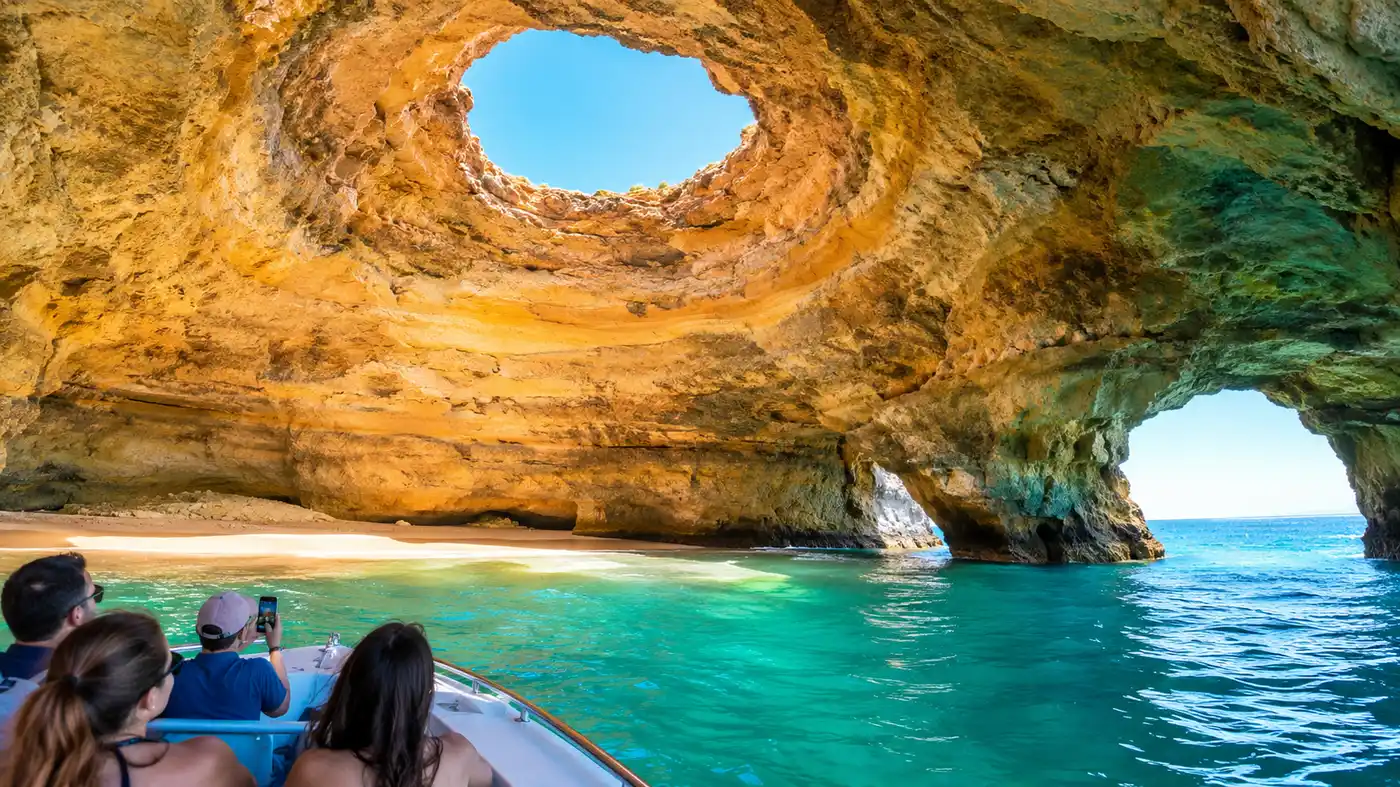
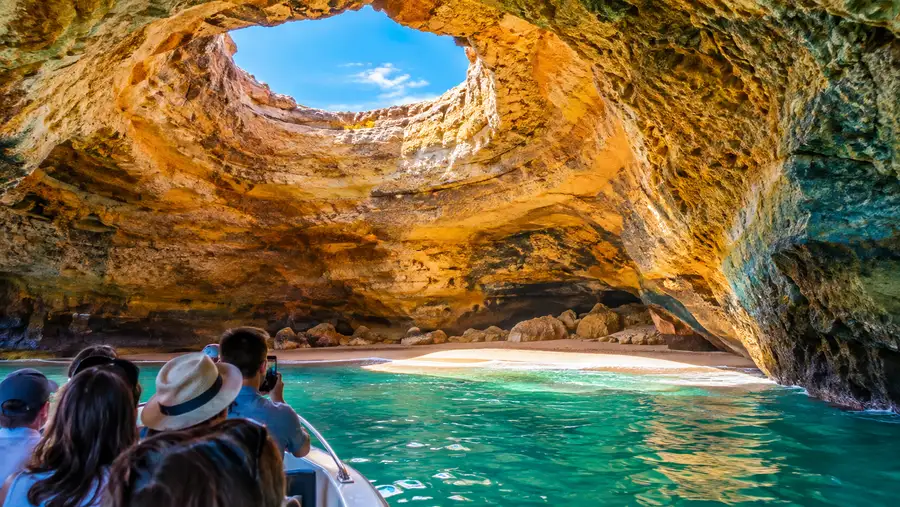
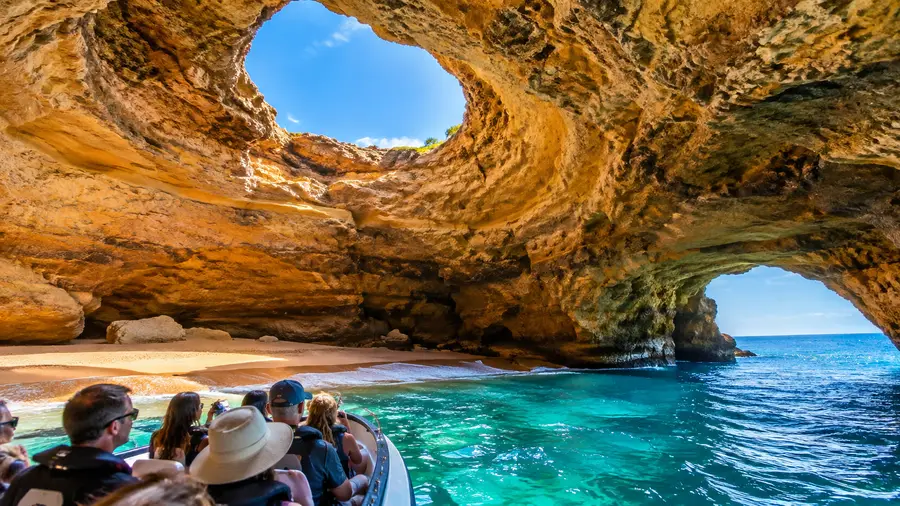
The Benagil cave, known locally as Algar de Benagil, takes center stage for good reason. It looks like a cathedral designed by the ocean. Two arched openings filter turquoise water into a sheltered beach, and a massive circular hole in the ceiling pours amber sunlight directly onto the sand below. Standing inside or floating near its entrance feels ancient and vast. Midday light strikes the cave floor like a spotlight, illuminating swirling patterns in the yellow rock layers that date back roughly twenty million years.
Just two miles east sits Gruta dos Capitães, or the Captain's Cave. It is only accessible during low water when the ocean settles down. Small boats slide through a low-slung gap into a hidden dome with a pristine strip of sand that disappears completely at high tide. You will also find the Elephant Cave near Ponta da Piedade, where weathered sea stacks mimic the silhouette of an elephant dipping its trunk into the bay. The rock formations around Ponta da Piedade feature narrower crevices and vibrant underwater reefs, making that western stretch feel intimate compared to the gaping halls near Carvoeiro.
Further west, toward Praia da Marinha, you come across the Arco Natural and subterranean passages carved clean through cliff fins. Some chambers echo with the sound of compressed air escaping blowholes, spitting fine mist twenty feet into the air. Every bend in the cliff reveals another cavern, each shaped by its own specific mix of wave direction, rock density, and age.
Choosing the Right Boat Tours in Algarve
Picking the right watercraft is the single most important choice you will make for this trip. The wrong boat means you sit outside looking at cliff walls from two hundred yards away, wondering why you bought a ticket.
Large catamarans and party boats carry sixty to a hundred passengers out of the major marinas. They offer restrooms, shaded seating, and onboard bars, which appeals to families traveling with small toddlers or grandparents. These boats cannot enter the caves. They are physically too tall and wide to clear the rock openings. If you book a catamaran, you will look at cave entrances from the safety of open water. Crew members sometimes deploy small rubber tenders to ferry guests inside for quick two-minute glimpses, but that process eats up time and limits how many spots you visit.
Small rigid inflatable boats (RIBs) carrying ten to twelve passengers offer the sweet spot. These nimble vessels zip across open water between harbors, and their shallow draft lets experienced skippers maneuver deep into darkened chambers. You get close enough to touch the damp limestone walls, smelling the salt and wet moss as waves bounce off subterranean ledges. The ride between caves can be bouncy, so hold onto the safety ropes when the driver opens up the throttle.
If you prefer muscle power over an outboard motor, guided kayak tours and rentals allow you to explore at your own pace. Paddling into an echoing sea cave with water dripping from the ceiling is unforgettable. You hear every ripple against the hull. Just keep in mind that coastal currents are real, and Atlantic chop can exhaust inexperienced paddlers within an hour.
Pro tip: Book the earliest morning departure of the day. Wind speeds along the Algarve typically pick up after 1:00 PM, turning calm ocean conditions into rough chop that makes cave entry impossible.
| Craft Type | Cave Access | Ride Comfort | Average Cost | Best Suited For |
|---|---|---|---|---|
| Small RIB (10-12 pax) | Full entry into narrow chambers | Active, bumpy, spray likely | €30 - €45 | Photographers and adventurous travelers |
| Catamaran (50+ pax) | Exterior views only | Stable, restrooms, full shade | €35 - €55 | Families with infants or seniors |
| Sea Kayak / SUP | Complete access into shallow grottos | Physical workout, wet | €35 - €50 | Active travelers seeking a quiet pace |
| Traditional Wooden Boat | Enters most medium caverns | Mild sway, partial shade | €25 - €35 | Ponta da Piedade scenic tours |
I usually lean toward the small RIBs departing from local fishing beaches. The captains grew up reading these waters, and they know how to time incoming swells so the boat glides inside safely on the crest of a gentle wave.
Departure Towns for Algarve Boat Trips
You can launch from several towns along the coast, and your choice determines how much time you spend cruising across open sea versus exploring rock formations.
If you are based in the western Algarve, boat trips leaving from Lagos run daily toward both Ponta da Piedade and the central cave belt. Lagos sits inside a protected bay, so boarding at the marina is easy. Cruising east from Lagos toward Benagil takes roughly forty-five minutes each way across open water. That ride is scenic, often with dolphins playing in the wake, but it cuts into your actual cave-exploring window.
Portimão acts as the primary hub for mid-coast tours. Boats slip out of the Arade River, past the Ferragudo fortress, and reach the sea caves within fifteen minutes. It strikes a sensible balance if you want a reliable marina departure with ample parking, easy transport connections, and plenty of competing tour operators.
For visitors staying further east, Albufeira provides dozens of trips leaving from its modern marina. These excursions often combine dolphin watching in deeper waters with a high-speed blast westward along the cliffs to Benagil. The boat ride covers approximately twelve nautical miles of golden shoreline, passing Galé and Armação de Pêra along the way.
- Praia de Benagil: Launch directly off the sand on small wooden boats. You enter the world-famous cave within three minutes of pushing off the beach.
- Portimão Marina: The most dependable departure point for modern RIBs, featuring easy boarding, waterfront cafes, and reliable parking.
- Marina de Lagos: Best for exploring the labyrinthine arches of Ponta da Piedade or taking extended half-day tours east toward Carvoeiro.
- Albufeira Marina: Ideal for travelers wanting combination tours that pair cave visits with offshore dolphin tracking runs.
Parking near the smaller beach launch sites, especially Benagil, becomes chaotic between June and September. The access road is narrow, steep, and fills up by 9:00 AM. Choosing a marina departure from Portimão or Albufeira spares you that parking headache, even if it adds thirty minutes of scenic cruising on the open sea.
Book your benagil cave boat tour experience:
Tides, Sunlight, and Seasonal Conditions
The Atlantic does what it wants, and the sea caves change character hour by hour depending on ocean physics.
Tides swing substantially along this coast, shifting water levels by six to nine feet twice a day. Low tide opens up hidden sandbars and exposes submarine arches that you can slip under. High tide pushes seawater deep into the backs of the caverns. The sound of waves crashing against dark, subterranean stone during high tide is thunderous, but low overhead clearance prevents boats from slipping inside smaller openings. A mid-to-low tide window provides the safest and most visually striking conditions for cave entry.
Sunlight completely alters the visuals inside the grottos. Early morning light cuts into east-facing openings, turning the dark water emerald green. Around noon, the sun sits directly above the Benagil dome, dropping a pure beam of white light through the eye down onto the sand. By late afternoon, the exterior limestone turns fiery orange, casting long shadows across sea stacks, though cave interiors grow dim. If photography matters to you, pick a tour departing between 10:00 AM and 1:00 PM to catch that overhead illumination.
Note: Maritime authorities strictly forbid tourists from swimming into the Benagil cave from the neighboring beach. Strong riptides and heavy boat traffic make the swim hazardous, and local water police actively issue fines to violators.
Winter brings massive swells rolling in from the North Atlantic. From November through March, tour operators frequently cancel trips for days at a time due to safety concerns. May through October brings calmer seas, stable weather, and reliable tour departures, with July and August seeing peak water traffic.
Practical Preparation for Exploring Sea Caves in Portugal
Heading out onto the Atlantic requires a little preparation so minor discomforts do not derail your day.
Temperatures on the water sit several degrees lower than on the beach. Even when land temperatures hit eighty-five degrees in July, the wind whipping over open water cools you down fast. You will want a light, water-resistant windbreaker pulled over your t-shirt. Footwear matters too if you join a kayak group or board from a beach where you must wade into calf-deep surf. Rubber sandals or neoprene water shoes make walking on wet, pebbly shorelines painless.
- Waterproof dry bag: Saltwater spray kicks up over the boat gunwales, so keep cameras and phones sealed inside a dedicated roll-top sack.
- Windbreaker or fleece: The Atlantic breeze cools the skin rapidly once the boat hits cruising speeds of twenty-five knots.
- Polarized sunglasses: Polarized lenses cut through ocean surface glare, allowing you to see submerged rock shelves and sea life below.
- Motion sickness tablets: Lingering ocean swells outside cave entrances can trigger nausea quickly while the boat idles near rock walls.
Take motion sickness medication forty-five minutes before your boat departs if you are prone to seasickness. The rocking motion inside a cavern, combined with looking up at curved rock ceilings, disorients your inner ear faster than open-sea cruising. Once that sick feeling sets in, there is nowhere to step off until the tour concludes.
Frequently Asked Questions about algarve caves
Can you walk inside the sea caves from land?
Most sea caves sit at the base of sheer vertical cliffs and have no overland access. You can view the Benagil cave skylight from a railed clifftop walking path above, but entering the cave itself requires water transport like a boat, kayak, or paddleboard.
How far in advance should I book an Algarve cave tour?
During the peak summer months of July and August, small boat tours sell out three to five days ahead. In shoulder seasons like May, June, or September, booking twenty-four to forty-eight hours in advance usually secures your preferred time slot.
Are cave tours safe for young children?
Yes, children are welcome on most tours, though age minimums vary by craft. Small RIB operators usually require kids to be at least four years old, while larger catamarans welcome infants and toddlers with mandatory life vests provided on arrival.
What happens if the sea is too rough on my tour day?
Skippers monitor maritime buoys every morning. If ocean swell makes entering the caves dangerous, operators cancel trips and offer a full refund or the option to reschedule for another date with calmer conditions.
Quick Reference
- Best travel window: May through October
- Ideal tide stage: mid to low tide
- Prime light for Benagil: 10:30 AM to 1:00 PM
- Standard tour length: 1.5 to 2.5 hours
- Typical ticket price: €30 to €45 per adult
Book your benagil cave boat tour experience:
Before You Go
Standing on the beach watching the cliffs from shore gives you only half the story. The real soul of the southern coast reveals itself out on the water, where centuries of relentless waves have carved hidden sanctuaries into ancient limestone. Grab a light layer, book a morning slot on a nimble boat that can actually fit inside the grottos, and give yourself time to sit back and watch the Atlantic work its quiet magic on the Portuguese cliffs.
Read more about benagil cave boat tour.